The course and the test
The road test, explained
What actually happens between arriving at a kerb in Queens and reading a result that evening, set out in the State's own order.
Before the morning
Two jobs the week before, and both of them are yours rather than a school's.
Confirm the appointment. The State's scheduling system will confirm, reschedule or cancel on the same telephone number and the same website you booked on, using the identification number printed on your permit. Road tests are cancelled, moved and relocated for bad weather and for road construction, and the confirmation is a two-minute job that saves a wasted journey.
Check the certificate and the car. The pre-licensing certificate has to have been valid on the day you booked; the car has to carry a valid registration, inspection and insurance and wear permanent plates. Both are checkable the week before and neither is fixable at the kerb.
Scheduling, confirming and cancelling a road test (opens dmv.ny.gov in a new tab)
What to bring
The examiner checks these before anything else happens, and a missing one ends the morning.
In your own pocket
- Your physical photo learner permit. A mobile identification on a telephone is not accepted. If all you hold is an interim permit without a photograph on it, you also need a New York State photo driver licence or non-driver photo identification card — an out-of-state photo document is not accepted for this.
- Your glasses or contact lenses, if your permit carries a corrective-lens condition. Turning up without them forfeits the morning.
- The original pre-licensing course completion certificate, form MV-278. A copy is not accepted. If you took the course online, or a driver education certificate is already on your record, there is no paper to bring.
- Form MV-262, the certification of supervised driving, if you are under eighteen — at every road test, not only the first.
In the accompanying driver's pocket
- A physical driver licence, valid to operate the car being tested in. Again, not a telephone.
- Over eighteen if they drove you to the site; over twenty-one if you drove yourself there.
- Nobody else. Only the accompanying driver is allowed at a road test site, and firearms, rifles and shotguns are prohibited there outright.
The fifty supervised hours, and the form that certifies them
On the morning itself
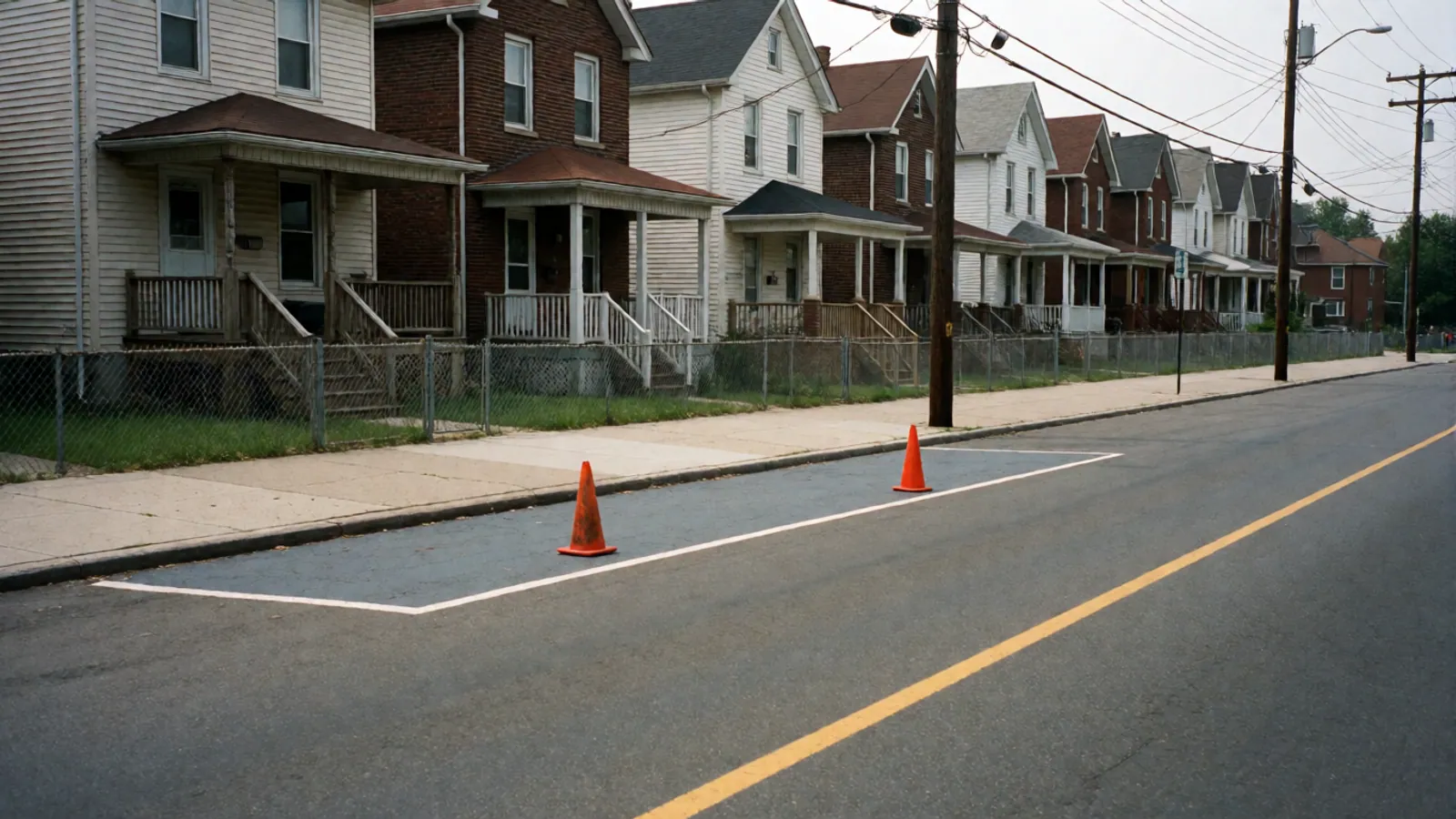
A road test site is a kerb on a named block rather than a building, and the whole thing happens in the street.
Arrive early, but not very early
The State asks you to arrive up to fifteen minutes before the appointment time. If you are late the examiner may not be able to test you and you will have to reschedule, which is a fortnight of your life for a wrong turn.
Join the line of cars
Cars wait in a line along the block, facing the way the site works. Your instructor or your accompanying driver deals with that part; you sit in the driver's seat and try to think about something else.
The examiner comes to the car
They check the documents and the vehicle, photograph the candidate, the documents, the permit and the car, and then get in beside you. The accompanying driver gets out and waits.
You drive
A short route on ordinary streets, with the manoeuvres the site is set up for. The drive is the short part of the morning; the waiting beforehand is usually the long part, and nobody publishes a figure for either.
The examiner keeps the paperwork
The original MV-278 is surrendered and not returned, and the MV-262 goes to the examiner too if you are under eighteen. That is why a copy of either is no use and why the second road test needs a second MV-262.
The result, the same evening
Results are posted after 6 pm on the day, on the State's own road test results page. Nobody at a driving school is told before you are, and nobody at a driving school can move it.
If it does not go your way
Which is common, is survivable, and is not the end of the permit you already hold.
The application fee you paid for your learner permit included two road tests. If neither of the first two goes your way, you buy a further pair before you can schedule another one; they are sold two at a time and the DMV's own page carries the current amount, which is why there is no figure for it on this page.
There is a wait. The State asks for at least fourteen days before you take the test again. In practice the next free morning at a busy site is further out than that, which is worth knowing on the day you are deciding whether to book early.
Your permit is unaffected. Failing a non-commercial road test does not invalidate a learner permit; it stays valid to the expiry date printed on it. Nothing is taken away from you that morning except the morning.
And the useful thing to do next is not to book immediately. An hour with an instructor who asks you what happened, followed by a run of the same route, moves a second attempt further than a fortnight of worrying about it does.
Read the rule at the source
Everything above is a summary of the State's own instructions, checked in September 2026. Where the two disagree, the State is right.
- Schedule and take a road test (opens dmv.ny.gov in a new tab) — what to bring, the vehicle requirements, the wait after a failed test and how results are published.
- Form RT-3, scheduling by telephone or internet (opens dmv.ny.gov in a new tab) — the State's own instruction sheet for booking, confirming and cancelling.
- The Driver's Manual, chapter one (opens dmv.ny.gov in a new tab) — licences, permits and the road test, from the book the written test comes out of.
Get the drive ordinary before the morning
A test-route lesson is the same streets at the same hour, run start to finish. Pick an instructor and a time out of the diary; nothing is paid on this website.