six minute read
Driving at night in the city is a separate skill
Fifteen of the fifty supervised hours must be after sunset, and there is a reason the State counts them separately.
37-32 61st Street, Woodside, NY 11377
The journal
A test taken in an automatic gives you a licence with a restriction on it. Here is what that does and does not stop you doing.
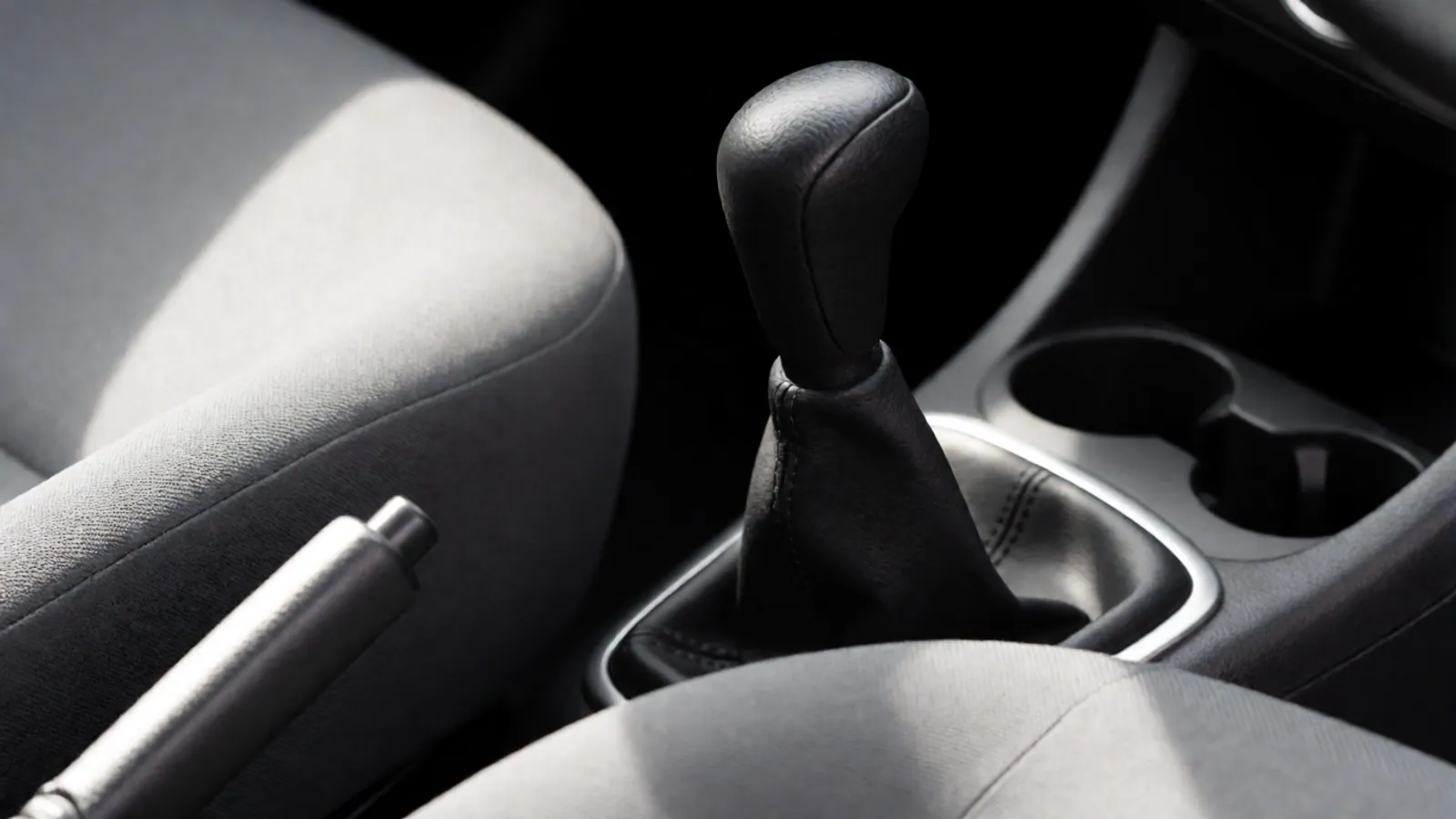
Almost everybody who learns here learns in an automatic and takes the road test in one. The school keeps one manual car for the people who do not want that, and this article is for deciding which of those two you are.
A road test taken in an automatic gives you a licence with an automatic restriction on it. That restriction is the State's, it is printed on the licence, and it means the licence is not valid for a car you have to shift yourself.
We are not going to paraphrase the exact wording of a restriction on your own licence, or tell you what it takes to have one removed. That is on the State's own licence-class page and it is precisely the sort of rule that is worth reading rather than being told about. Licence classes and restrictions at the DMV (opens dmv.ny.gov in a new tab)
Driving a manual car on that licence. Which is a small thing until it is not, and here are the four cases where it is not:
The commonest one by a distance. A family with one manual car and a newly licensed driver who cannot legally drive it has bought a problem, and usually finds out about it a week after the licence arrives.
Vans, small lorries and older fleet cars are far more likely to be manual than a private car is. If a job might involve driving something the employer owns, ask before you book a test rather than after.
Outside this country the manual is often the default and always the cheaper booking. A restricted licence turns that into a more expensive holiday every time.
The second-hand end of the market has more manuals in it than the new one does, and a restriction quietly removes a slice of what you can shop for.
A first hour with a clutch is a short hour. Finding a biting point eats the beginning of it, and the rest goes on hill starts and on not stalling at junctions. That is why this school books manual lessons as extended lessons of an hour and a half rather than standard lessons of one hour: not to sell you a longer lesson, but because the shorter one does not contain a useful amount of driving.
An hour and a half costs what it costs, and it is a real difference in the bill. The figures are on the prices page, printed beside the number of lessons and the length of each, and we would rather you compared them before you decided than discovered them afterwards.
It will probably take more lessons, not fewer. And the road test is the same test with one more thing to get wrong in it. A hill start is a different hill start with an examiner beside you.
Against all that: it is far easier to learn now, while everything is new and nothing is a habit yet, than to come back to it in five years with a licence you do not want to put at risk.
Not a ruling. Neither list is advice about your licence. Which restriction ends up printed on it, and what removes one, is the State's business and is worth reading on the State's page before you book a test in either car.
A manual car, for drivers who want the licence without the automatic restriction. A dual-control clutch as well as a brake — so the instructor can stop the car and can take the clutch out of your hands, which is why a first hour with one is less alarming than it sounds.
Marta Oyelaran teaches it. Marta teaches the manual car and takes most of the school's nervous and returning drivers. Her first lesson with a nervous driver is often a stationary one, and she says so before it is booked rather than after.
She works Monday to Friday, 8 am to 4 pm. There is one manual car, so a manual lesson is one diary rather than four, and it is worth booking a little further ahead than an automatic lesson needs.
Six pieces about learning to drive in this borough, written by the people who teach it.
six minute read
Fifteen of the fifty supervised hours must be after sunset, and there is a reason the State counts them separately.
seven minute read
The honest answer is a range, and four things move it — none of which is how clever you are.
Reserve a package and it becomes credits. Then pick an instructor, a date and a time out of the real diary, and give us the address to pick you up from. Nothing is paid on this website.