six minute read
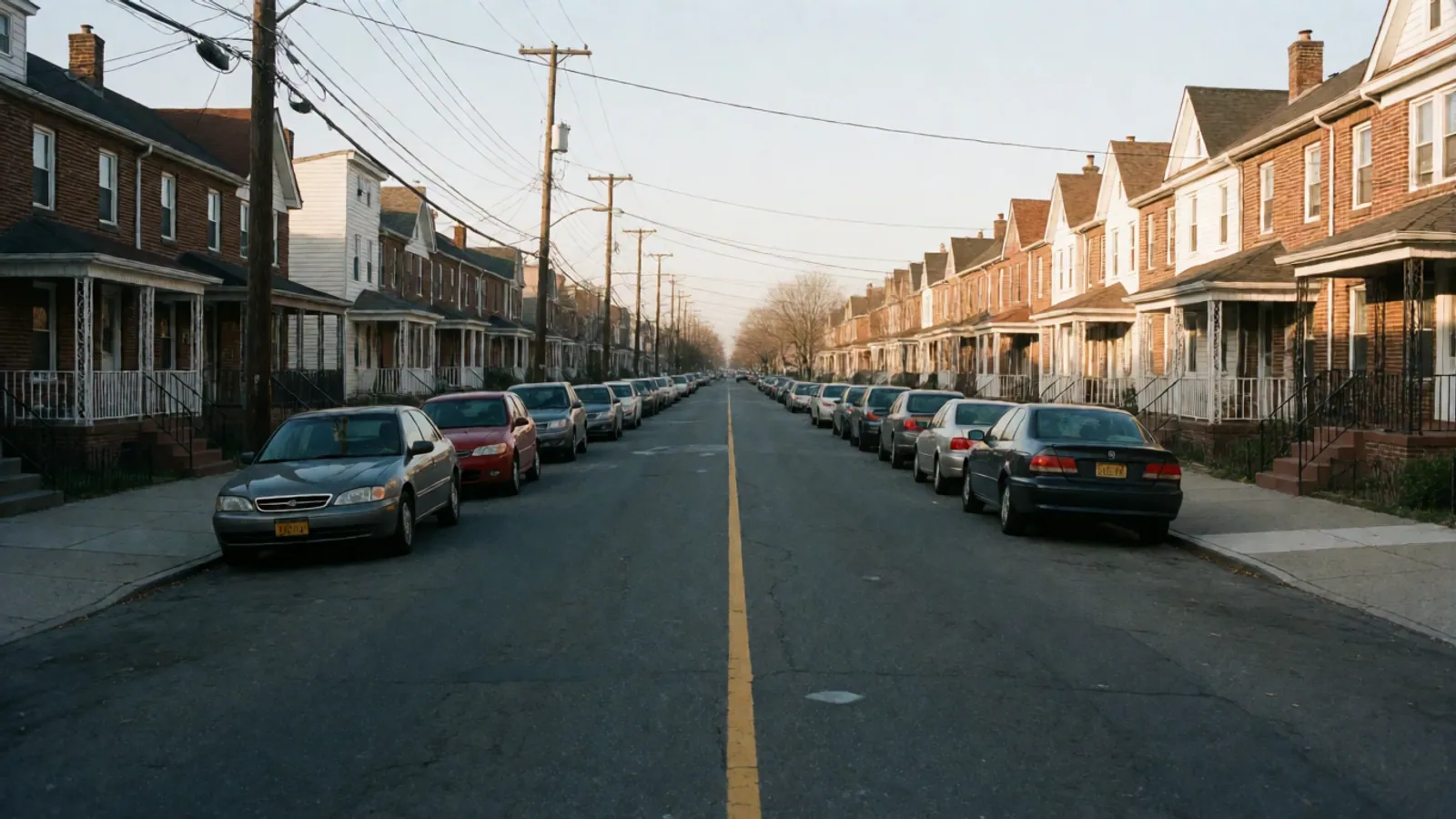
Why the first lesson is on a quiet street and not on Roosevelt Avenue
What the first hour is actually spent on, minute by minute, including the ten minutes the car does not move.
37-32 61st Street, Woodside, NY 11377
The journal
The honest answer is a range, and four things move it — none of which is how clever you are.
It is the first question on almost every telephone call, and it deserves a straight answer, so here is ours: we do not know yet, and neither does anybody who has not sat beside you while you pull away from a kerb. Aptitude is not visible in advance. It is not visible over the telephone, it is not visible from your age, and it is not visible from how confidently you describe yourself.
A school that answers it in the first sentence is not estimating. It is quoting the size of the package it would like to sell you, which is why the figure quoted is so often exactly the size of a package. There is a whole page on this site about why we will not do that, and it is one of the pages that costs us money.
What we can do — and what is actually more useful than a number would be — is tell you what the number depends on. Three of the four things below are yours to change, and between them they matter more than anything a school could put in an advertisement.
Somebody who drove for years on another country's licence is not a beginner. They are a driver learning a new test, a new set of road habits and a borough they have only been a passenger in, and most people in that position take one or two extended lessons of an hour and a half and then go and book. Somebody who has never held a wheel is starting at the start. Those are two different arithmetics and no single figure covers both.
This is the largest divider we see, and it has nothing to do with the learner. A student with a car at home and an adult willing to sit in it is on a different curve from a student whose only time at a wheel is the hour they bought. It is not effort and it is not talent. It is exposure, and exposure is bought with access rather than with will.
An hour with somebody calm is worth several with somebody who gasps at junctions. New York requires that supervising driver to be at least twenty-one and to hold a licence valid for the car you are driving. It does not require them to be calm, and the calm is the part that shows up in your hours: a learner taught to drive while frightened has to be untaught later, and that costs more lessons than it ever saved.
The most controllable of the four, and the one people set by accident around a work roster. Two lessons a week and one lesson a fortnight are not the same product bought at different speeds; they are different totals.
Two lessons a week gets somebody ready in about half the calendar time of one a fortnight, for the same number of lessons. That is the sentence in this article we would most like people to take away, and it is the one nobody asks about.
The reason is not mysterious. Almost nothing you learn at a wheel is knowledge. It is motor habit — the hand that finds the indicator without a thought, the foot that comes off the accelerator before the junction rather than at it — and habit decays across a gap. A fortnight's gap spends the first part of the next lesson rebuilding what the last one built, and you pay for that part twice.
The practical consequence for your diary is dull and worth acting on: if the only pace you can manage is one lesson a fortnight, buy the smaller block, expect the total to be higher, and do not be discouraged by it. Credits last twelve months from the day you reserve them, which is long enough for either pace, and the balance is on your own page where you can see it rather than in a drawer here.
New York's own number is not a number of lessons. A candidate under eighteen has to hand the examiner a certification that they have had fifty hours of supervised practice, fifteen of them after sunset, and the DMV recommends that at least ten of the fifty are in moderate to heavy traffic. A parent or guardian signs that certification. A school cannot sign it for hours it was not in the car for.
Fifty hours is not fifty lessons, and it is not a target for a licence either — nobody over eighteen has to log anything at all. What it is, is the State's own published view of how much exposure a new driver needs before it will consider testing one, and it is a great deal more than the number in most advertisements. The DMV's own page for parents (opens dmv.ny.gov in a new tab)
Hours driven with an instructor count toward those hours, and the State's form has a table for a school to record the ones it gave. The rest — the evenings with a parent, the Sunday mornings in an empty car park — is signed for by the adult who was sitting there. How the certification works and what a parent is actually signing both have pages of their own.
Ten lessons is the block most people who have never driven end up buying. Plenty need more. The ones who need fewer usually held a licence somewhere else. Five lessons is the block for somebody who is coming back to driving rather than starting, and a single lesson is the right way to begin if you are not yet sure you want any of this — it is the dearest way to buy an hour and we say so on the prices page rather than hoping you do not notice.
None of that is an estimate for you. It is a description of a queue of other people, and the only honest reason to publish it is so that nobody is surprised by the shape of the bill.
After your first lesson the instructor will tell you what they actually think, in hours, and write it on your account so that the next instructor sees the same number rather than starting a fresh guess. If that number goes up after lesson four, you will hear that too. Revising an estimate upward in front of a customer is the part of this job that a confident figure in a footer is designed to avoid, and it is the part worth paying for. What the blocks cost.
Six pieces about learning to drive in this borough, written by the people who teach it.
six minute read
What the first hour is actually spent on, minute by minute, including the ten minutes the car does not move.
eight minute read
It is almost never the parallel park. It is observation, and it is usually in the first ninety seconds.
Reserve a package and it becomes credits. Then pick an instructor, a date and a time out of the real diary, and give us the address to pick you up from. Nothing is paid on this website.