Office hours 000-000-0000
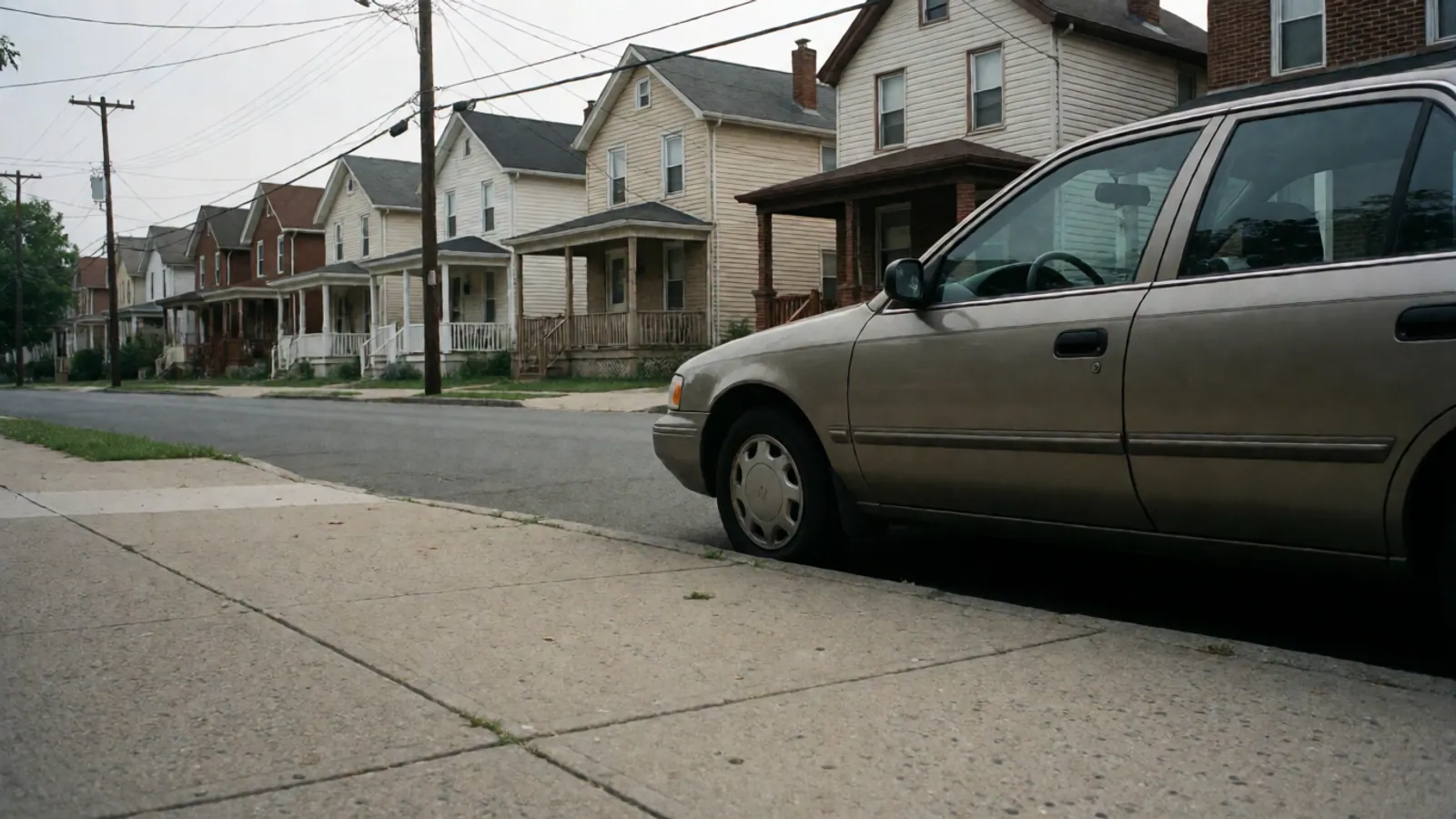
A car parked at a kerb with its engine off, seen from the pavement, the street quiet and empty

Driving lessons

Nervous drivers

Marta takes most of these, and her first lesson is often a stationary one. We would rather you read that here than discover it in the passenger seat.

The first lesson is often a stationary one

Said here, on the page, rather than after you have paid for it. A lesson in which the car does not move is still a lesson and it still spends a credit.

Marta takes most of the school's nervous drivers, and her first lesson with one is frequently an hour in a parked car. That is a deliberate use of the hour and not a wasted one, but it is the kind of thing a school ought to tell you before the booking rather than in the passenger seat.

What happens in it: you sit in the driver's seat of a car that is switched off, on a street with nothing on it. The seat goes where you want it. The mirrors get adjusted by you rather than for you. You find the pedals with your own feet, several times, until they are where your feet expect them to be. Then the engine, and the car creeping the length of a quiet street and stopping, which for some people is the whole of the first lesson.

Plenty of people do all of that early and drive for the rest of the hour. Some do not. Neither outcome is a verdict on anything, and the instructor will tell you which one she expects before the next lesson is booked.
What we will not do

  • We will not put you on a four-lane avenue in week one. The pickup address is not the route, and a first lesson starts on quiet streets whatever your postcode.
  • We will not raise our voices. There is a brake pedal on the instructor's side and it is a great deal quieter than shouting.
  • We will not tell you that everybody feels like this. Some people genuinely do not, and being told otherwise by somebody perfectly calm is not reassuring.
  • We will not put you in for a road test we do not think is going to go well, however many lessons you have bought.
  • We will not describe this as treatment for anything. Driving instruction is what happens here, and it is all that happens here.

Why we will say no to a test date

Tell us before, not during

There is no form of words you have to find. "I have not driven since a crash", "I am fine until somebody beeps", "I do not want to be picked up outside my office" are each one sentence and each one changes how the hour is planned.

Telephone the office before you book if it is easier than writing it down. Dana builds the week and will put you with whoever is the right person rather than with whoever has the next free slot, which is a thing a diary on its own cannot do.

If driving frightens you as part of something larger, an instructor is not the person for that part of it, and we would rather say so plainly than take a booking and be quietly useless. What an instructor can do is make the car itself stop being one of the frightening things.

The office, and when somebody is at it

What the hour looks like once the car moves

  1. Streets with nothing on them

    Stopping and starting until stopping and starting is dull. Dullness is the objective and it is underrated.

  2. One new thing

    A junction, or a right turn, or a road with a car parked on it. One per lesson, and it is named before it happens rather than sprung on you.

  3. Somewhere to stop

    If you want to pull over, you pull over. The instructor will not drive on through it to prove a point and the hour does not stop counting because you did.

  4. A little more traffic than last time

    Eventually, and by agreement. The busy avenue arrives when you are bored of the quiet one, which is a much better signal than a lesson number.

  5. The end of the hour

    Back to an address you chose, and a plain sentence about what the instructor saw. Nobody is graded here and nobody is told they were brave.

Who takes them, and what it costs

Nervous drivers and returning drivers are the same instructor's work, which is not a coincidence: both are mostly about giving somebody their own judgement back.

Marta Oyelaran. Marta teaches the manual car and takes most of the school's nervous and returning drivers. Her first lesson with a nervous driver is often a stationary one, and she says so before it is booked rather than after.

Her diary is Monday to Friday, 8 am to 4 pm, in Car C, the manual car.

A first lesson here is usually the standard lesson — one hour, one credit — because a single one is the cheapest way to find out how it goes. Some people prefer the extended lesson for the room it leaves at the start, and that is a reasonable way to spend the money.

One standard lesson

$70

one lesson of one hour · $70 a lesson

  • One hour, one credit. The usual way to start if you have never driven.
  • Credits last twelve months from the day you reserve them
  • The dearest way to buy an hour, and the right way to start if you are not sure

Reserve this

Five standard lessons

$325

five lessons of one hour · $65 a lesson

  • Five hours of credit, spent one at a time from whichever diary suits you.
  • Credits last twelve months from the day you reserve them
  • $25 less than five lessons bought one at a time

Reserve this

Where the figures come from. Every price on this page says how many lessons it buys and how long each one is, because that is what New York requires of a driving school's advertised price and because a figure without a duration beside it is not a price.

Refresher lessons What the first hour is spent on

Ready to book a lesson?

Reserve a package and it becomes credits. Then pick an instructor, a date and a time out of the real diary, and give us the address to pick you up from. Nothing is paid on this website.