Office hours 000-000-0000
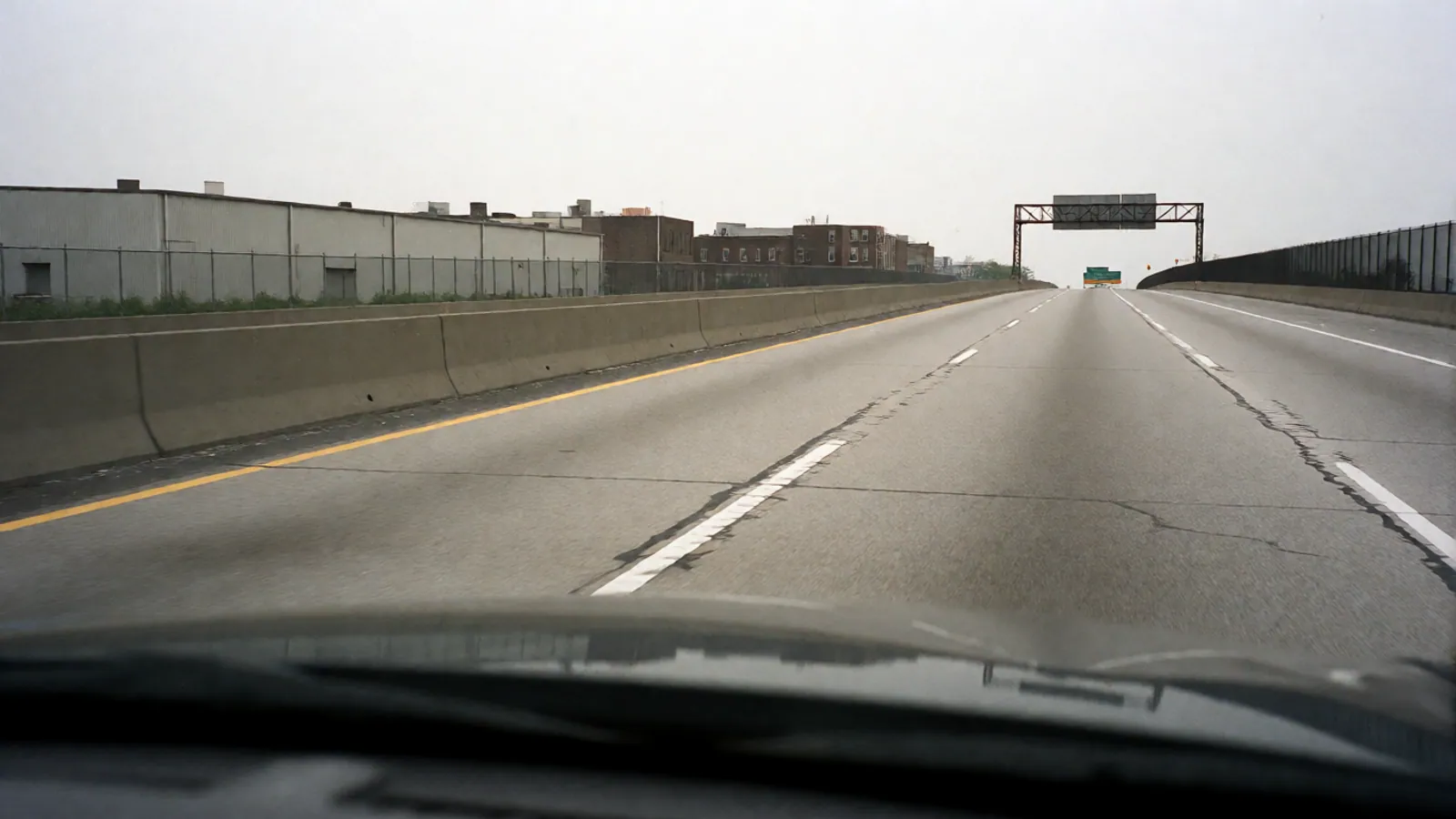
A wide multi-lane expressway seen through a windscreen, a concrete barrier along the left edge and warehouses behind the fence on the right

Driving lessons

Highway and night driving

The slip road, the merge, the bridge approaches, and the months when the late diary is dark from one end to the other.

The ramp is the lesson

Merging is the one thing a learner cannot practise by doing something slower first. Either you are matching the speed of a road you are about to join, or you are not doing it.

Highway lessons here start on one ramp in particular. The BQE at 58th Street: The ramp the highway lessons start on, because it has a long merge and a clear view of it. A slip road you can see the whole of before you commit to it is worth more in a first highway hour than any amount of explanation, because the thing that goes wrong on a short ramp is that the driver runs out of road while still deciding.

The order is mirror, shoulder, gap, speed — and then the wheel. Most people who find merging frightening are doing it in the wrong order: they steer first and look afterwards, which turns a join into a negotiation. Doing it in the right order is a habit rather than an insight, and habits take an afternoon rather than a sentence.

Then the rest of it, which is not the merge at all: holding a lane while the surface changes, following distance that survives somebody braking, the blind side of a lorry, reading a sign that arrives later than it should, and the deceleration lane, where more people get into trouble than on the way in. Ditmars, Steinway and 31st Street, and the approaches to the Triborough — where most Queens learners meet a highway ramp for the first time. Jackson Avenue, Vernon Boulevard and the numbered streets around them, with the Queensboro Bridge and the Pulaski a few blocks in either direction.
What an hour and a half of highway work is spent on

The reason this is the longer lesson is arithmetic rather than ambition: a highway lesson has a drive out and a drive home inside it, and an hour spends most of itself on them.

  1. Getting there

    The approach streets, at ordinary speed. A driver who arrives at the slip road already flustered is not going to merge well, and the way to arrive calm is to have driven calmly for the streets before it.

  2. The slip road

    Speed matched before the white line runs out, not after it. This is the part that is practised repeatedly, off and on again, until it stops being an event.

  3. Staying in it

    Lane discipline, following distance, and what to do about the car that sits exactly where you cannot see it. Nothing here is dramatic and all of it is what the hour is for.

  4. Coming off

    Reading the sign, moving over in time, and losing the speed in the deceleration lane rather than on the road you are joining.

  5. The bridge approaches

    Queues, lane changes at a crawl, and the merge that happens at walking pace and still goes wrong. It is a different skill from the fast one and it is closer to daily driving.

  6. The drive home

    Back through ordinary streets, because the last thing that should happen in a lesson is the thing you are worst at.

Night driving is a separate skill, and it is seasonal

Danilo Cruz. Danilo has the late diary, which makes him the school's night-driving instructor from November to February. He teaches the bridge approaches and the ramps onto the Brooklyn-Queens Expressway.

What changes after dark is not the road, it is how much of it you are being given. Depth goes first, then colour, then the edges of things; oncoming headlights take your night vision and give it back slowly; a wet road turns every light source into three. Speed that was comfortable in daylight is speed that outruns your headlights, and almost nobody notices themselves doing it.

There is a reason the State counts these hours separately. A candidate under eighteen has to certify fifty hours of supervised practice with fifteen of them after sunset, which is not an arbitrary split — it is an admission that the two are different activities.

The seasonal part is simply that we teach it when it is actually dark. In high summer the late diary never gets there, and a lesson sold as night driving at dusk in June is a lesson sold under a false description.

Driving at night in the city The fifty supervised hours

What this lesson is not

  • It is not a first lesson. You want to be able to hold a lane and a steady speed before a slip road is any use to you, and an instructor will say so rather than take the booking.
  • It is not road test preparation. That is a different page, different streets and a different instructor's speciality.
  • It is not a night lesson on demand in midsummer. We teach night driving when the diary is dark, which is a fact about the calendar rather than a policy.
  • It is not given in ice, snow or a flood warning. Those lessons are cancelled by us, the credit comes back whatever the clock says, and somebody telephones you rather than waiting to be asked.

Road test preparation What happens when a lesson is cancelled

Which credit, and what it costs

Both highway and night lessons are booked as the extended lesson: an hour and a half in the car, one credit each.

One extended lesson

$100

one lesson of an hour and a half · $100 a lesson

  • Ninety minutes. A single is how most licensed drivers come back for a refresher.
  • Credits last twelve months from the day you reserve them
  • The dearest way to buy an hour, and the right way to start if you are not sure

Reserve this

Five extended lessons

$465

five lessons of an hour and a half · $93 a lesson

  • Five ninety-minute credits, for highway and night work or a long test route.
  • Credits last twelve months from the day you reserve them
  • $35 less than five lessons bought one at a time

Reserve this

Where the figures come from. Every price on this page says how many lessons it buys and how long each one is, because that is what New York requires of a driving school's advertised price and because a figure without a duration beside it is not a price.

Where it starts. Pickup for a highway lesson is free inside the usual neighbourhoods, and the two nearest the ramps are Astoria and Long Island City. Where the car meets you is still not where the lesson is given.

Lessons in Astoria Lessons in Long Island City

Ready to book a lesson?

Reserve a package and it becomes credits. Then pick an instructor, a date and a time out of the real diary, and give us the address to pick you up from. Nothing is paid on this website.