Office hours 000-000-0000
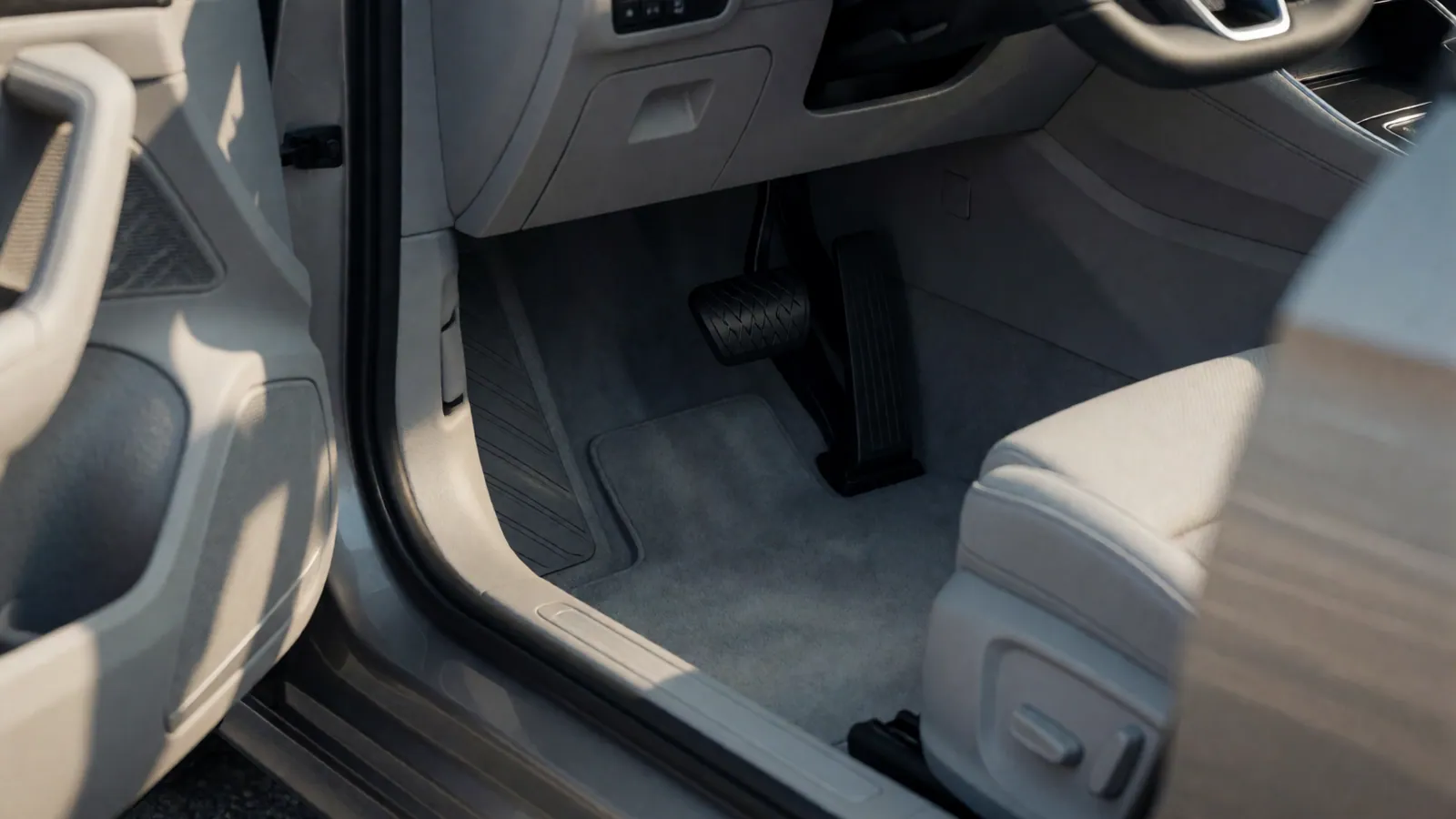
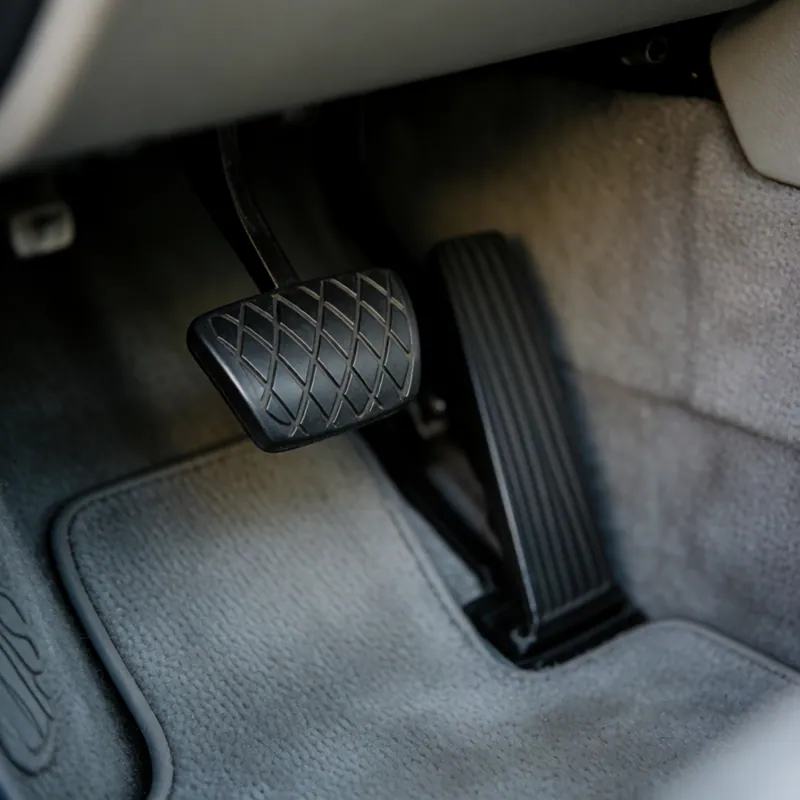
A car footwell seen from the open passenger door, an additional pedal standing beside the carpet

Driving lessons

The cars

Three cars, none of them named. What matters about a school car is what has been fitted to it and why, which is the whole of this page.

Why there is no make and no model on this page

You will not find a marque anywhere on this website. It is not coyness and it is not a licensing problem; it is a view about what a school car actually is.

A driving school does not make cars. It buys them, fits two pedals and a mirror to them, and then teaches in them for years. The badge on the bonnet is somebody else's engineering and borrowing it is the oldest trick on a school's website — a photograph of a premium saloon attached to a service that has nothing to do with it.

It goes further than the words. No photograph on this site contains the outside of a whole car, because a car's shape is a marque whether or not a badge is drawn into it. Every frame is taken from inside the car, along a flank, or tight on one fitting. There is no grille, no plate and no wheel centre anywhere on the site, and the roof sign is blank in the one frame it appears in.

What is left, once all that is gone, is the only thing about a school car that was ever worth reading: what is fitted to it and why each thing is there.

About the photographs. Every photograph on this site was generated. No car on it is a real car, no street is a particular street, and nobody's face appears anywhere.

How these pictures were made

Three cars

Two automatics and one with a clutch, described by what they carry rather than by what they are.

Automatic · dual controls

Car A

A mid-size automatic sedan with a dual-control brake and clutch-side footrest.

  • An instructor's brake pedal on the passenger side, and a second interior mirror
  • A reversing camera the instructor can switch off, because the road test does not have one on every car
  • Back-up sensors, left on for the first lessons and off for test practice
Automatic · dual controls

Car B

The second automatic, kept for road test days and longer routes.

  • Identical controls to Car A, so a test day is not the first time in a different car
  • Registered, inspected and insured, which the State requires of any car taken to a road test
  • A roof sign that comes off for the test, because the examiner is testing you and not us

Manual · dual controls

Car C

A manual car, for drivers who want the licence without the automatic restriction.

  • A dual-control clutch as well as a brake
  • Used for manual lessons only, and booked as an extended lesson because a first clutch hour is short
  • A licence taken in an automatic restricts you to automatics; this is the car that avoids that

What is fitted, and why

The fittings that make a school car a school car, each one on the vehicle for a reason somebody can state. Four of them are photographed below.

A second brake pedal in a car's passenger footwell, beside the carpet, in raking light
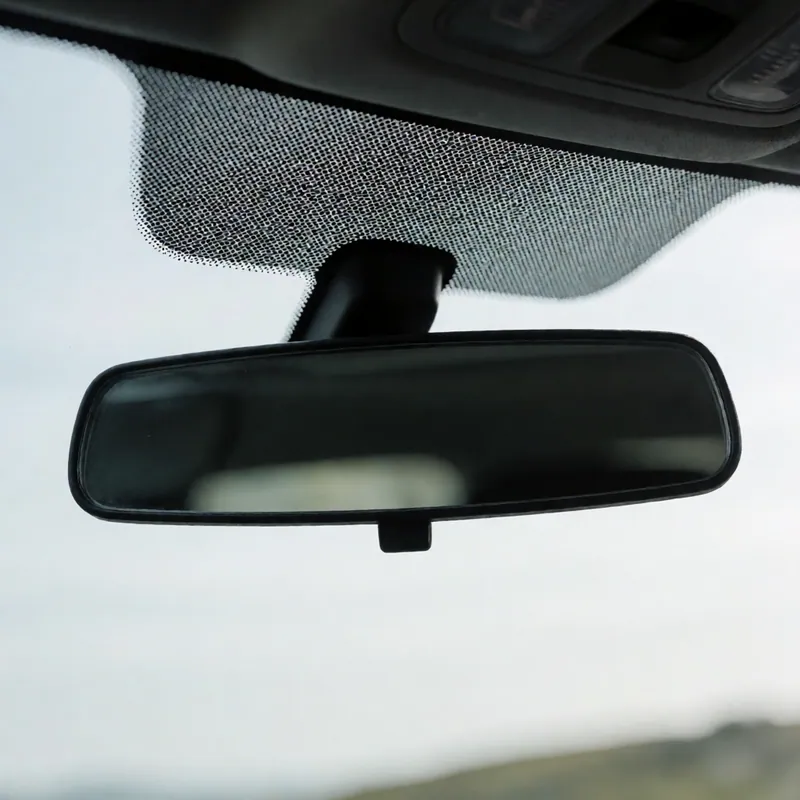
A car's interior rear-view mirror seen from below against a bright sky, its glass plain
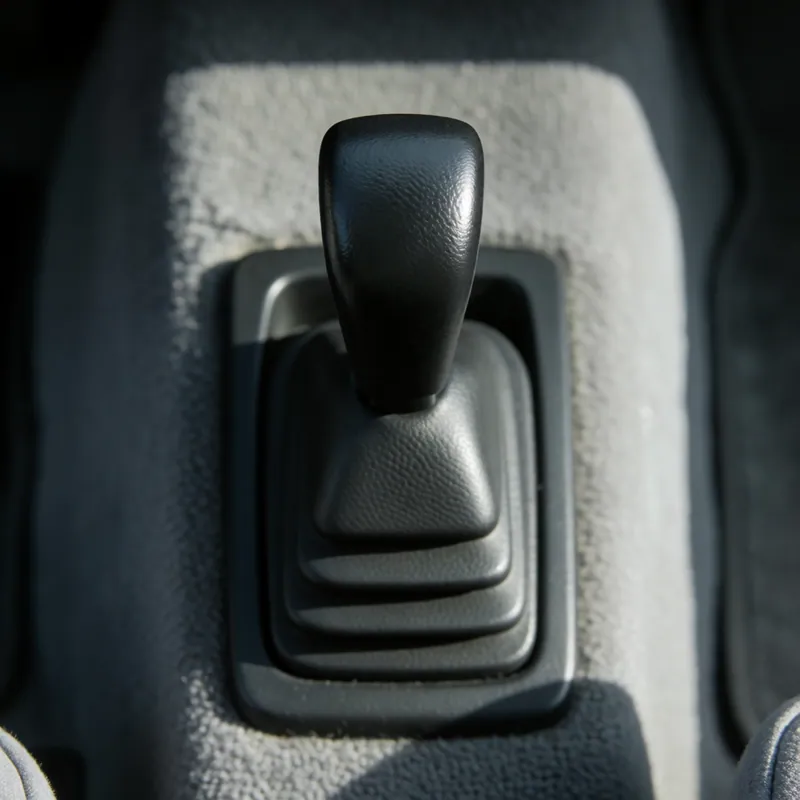
The top of a plain automatic gear selector standing in its gate, seen from above
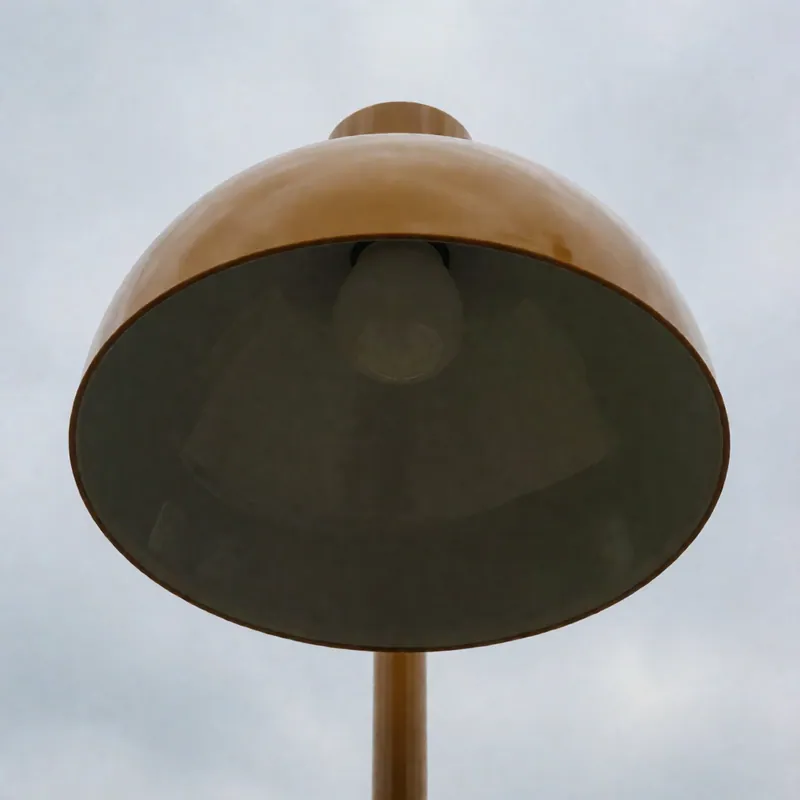
The underside of a plain amber dome lamp against an overcast sky, with nothing written on it
  • The second brake

    A brake pedal in the passenger footwell is the reason a first lesson can happen on a real street rather than in a car park. It is also, inside New York City, a condition on where a sixteen or seventeen year old may lawfully practise at all, which is the single most useful fact on this website.

  • The extra interior mirror

    Clipped to the top of the windscreen on the instructor's side. It means the instructor is watching the road behind you as well as the road ahead, without leaning across you to do it, which would be its own hazard.

  • The gear lever

    Two of these cars have a selector and Car C has a clutch and a stick. The reference points you learn in one car are that car's, which is worth knowing before you move to another one.

  • The roof lamp

    Plain, amber, and with no lettering on it in any photograph here. It comes off the car for a road test, because the examiner is testing you and not us.

Why the second brake decides where a teenager may practise The car with the clutch

What New York requires of a licensed school's cars

The State's rule, stated as the State's rule. Every one of these is a requirement on a licensed driving school, and the sentence after them is the important one.

  • Seat belts for the student and for the instructor.
  • An additional rear-view mirror for the instructor.
  • Dual controls on the foot brakes.
  • A STUDENT DRIVER sign, in lettering of a set minimum height on a contrasting background, readable from in front of the car and from behind it.

Those are rules about a licensed driving school, and this website is a demonstration for a school that does not exist. It holds no licence, no endorsement and no instructor certificate, and it prints no number claiming otherwise. When you are looking at a real school, the licence has to be displayed at the place of business with its schedule of fees beside it, and the instructor has to carry their certificate while teaching. Ask.

Why this site prints no licence number Why a driving school is not the DMV

The car on the morning of a road test

The State sets a standard for any car brought to a road test, and it is a short list: registration, insurance and inspection all valid, permanent plates on the vehicle, the car working properly and clean, and a passenger seat belt available and clean for the examiner to use. Some of that reads as fussy until you watch somebody be turned away for it.

The road test day booking here is two hours held across an appointment you made yourself: a warm-up drive near the site, the car itself, and the ride there and back. You book the test. We put a car behind it. We do not book appointments and we do not charge a fee for one.

The State's road test rules, including the vehicle (opens dmv.ny.gov in a new tab)

The school car for your road test The road test explained

What the cars do not do

  • The reversing camera and the parking sensors are switched off before test practice. A manoeuvre you can only complete with a beeping noise is not a manoeuvre you can complete.
  • There are no adapted controls beyond the instructor's own pedals. If an adaptation would make driving possible for you, telephone before booking rather than after.
  • No car here is for hire. The car arrives with an instructor in it, and that is the only way it arrives.
  • No car carries advertising for anybody but this school, and the roof sign is blank in every photograph because a plausible-but-wrong sign is worse than none.

Accessibility, in plain terms The policies in full

Ready to book a lesson?

Reserve a package and it becomes credits. Then pick an instructor, a date and a time out of the real diary, and give us the address to pick you up from. Nothing is paid on this website.