Office hours 000-000-0000
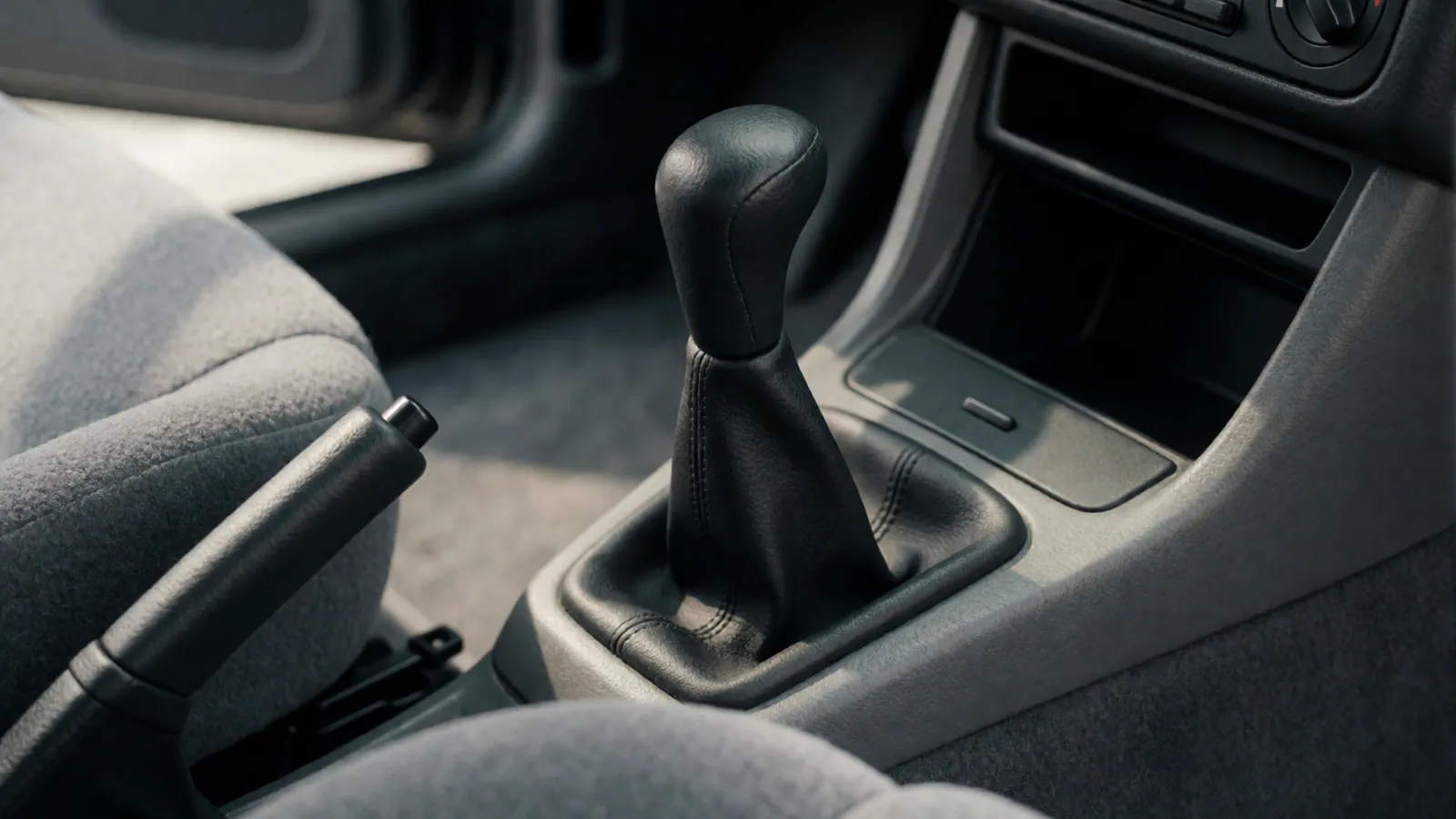
A gear lever and handbrake between two seats in raking daylight, the knob plain and unmarked

Driving lessons

Manual transmission lessons

One car in this school has three pedals. It is taught as the longer lesson, for one reason you can guess and one you probably cannot.

One car, three pedals, and a longer lesson

Car C is the only car here with a clutch in it, and manual lessons are booked as the extended lesson rather than the standard lesson.

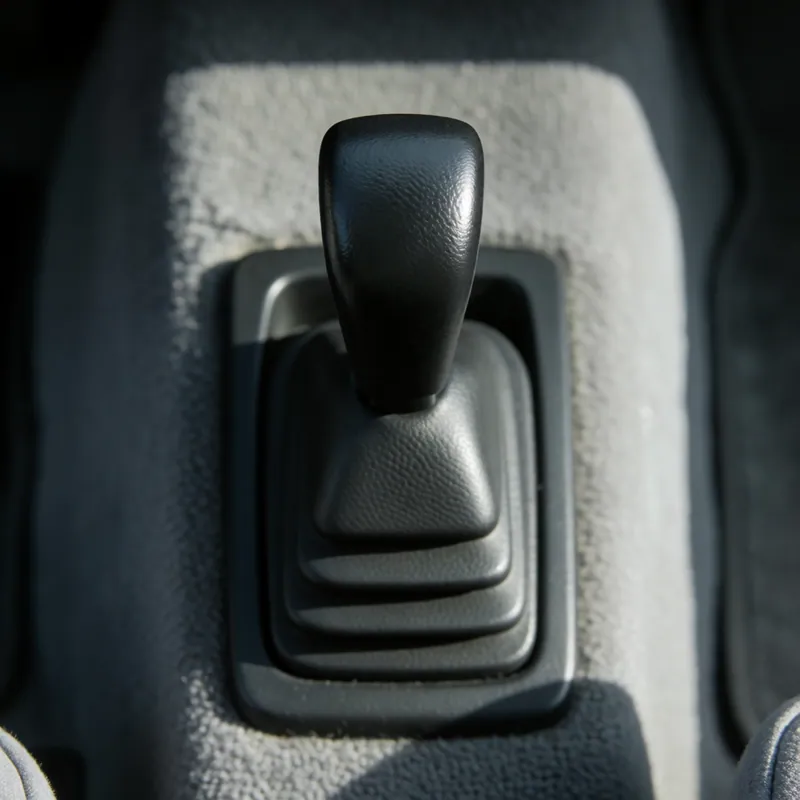
The top of a plain automatic gear selector standing in its gate, seen from above

A manual car, for drivers who want the licence without the automatic restriction.

The guessable reason for the longer lesson is that a first hour with a clutch is a short hour: a good deal of it is spent stationary, stalling, and starting again. The reason that is less obvious is that the useful part begins after the stalling stops, and an hour does not reliably reach it. Booking the longer lesson is not an upsell; it is the school declining to sell you an hour that ends at the interesting bit.

What is fitted to it is the same as the other cars with one addition: the instructor has a clutch as well as a brake, which is what makes it possible to hand a stalling car back to somebody on a hill without either of you rolling backwards.

  • A dual-control clutch as well as a brake
  • Used for manual lessons only, and booked as an extended lesson because a first clutch hour is short
  • A licence taken in an automatic restricts you to automatics; this is the car that avoids that

What the first clutch hour is actually like

  1. The car does not move

    Biting point, handbrake, no accelerator at all. A stretch of the car threatening to move and not moving, which teaches the left foot more than anything that happens afterwards.

  2. It moves

    First gear, a straight street with nothing on it, stop, do it again. The objective is that pulling away stops being an event, not that it is elegant.

  3. It stalls

    Several times. This is the part people take personally and it is the part with the least meaning in it. Restarting calmly is a skill of its own and it is the one being practised.

  4. Second, and the change

    Up, then down, then up under load. Changing gear while also steering is the first genuinely two-handed thing in the lesson.

  5. A hill

    Trucks, industrial blocks and hills. Grand Avenue, Flushing Avenue and the blocks below the LIE — commercial traffic, gradients and the unprotected left turns that come with both. A gradient is where the handbrake stops being a parking device and becomes part of the drivetrain.

  6. A junction

    Clutch and observation at the same moment, which is the whole of manual driving in one sentence. Everything after this lesson is repetition.

The restriction, in one paragraph

A road test taken in an automatic produces a licence that is restricted to automatics. A test taken in a car with a clutch does not carry that restriction. That is the entire argument for learning in a manual car in a city where most cars do not have one, and it is a good enough argument for some people and irrelevant to others.

Who it matters to: anybody who might drive a hire car abroad, anybody with a van or a trade vehicle in their future, anybody who will inherit a particular car. Who it does not matter to: most people driving in Queens, most of the time. We would rather say that than sell the longer lesson to somebody who does not need it.

Automatic or manual, and what the restriction does The cars

What the manual car cannot do

  • It cannot take you to a road test. Car C is used for lessons only, and the instructor who teaches in it does not take the road test day booking — so a test sat in a manual car is not something this school can put a car behind. If that is what you want, say so at the start rather than at the end.
  • It does not make a road test easier. A clutch is one more thing to get wrong on a morning when you are already nervous.
  • It is not usually a first lesson for somebody who has never driven at all. Most people learn the road first and the clutch second, and doing both at once is a slow way to do either.
  • It does not come with a second manual car. There is one, and a week when it is off the road is a week of telephone calls rather than a substitution.

The car we can put behind a road test

Who teaches it, and what it costs

Marta Oyelaran. Marta teaches the manual car and takes most of the school's nervous and returning drivers. Her first lesson with a nervous driver is often a stationary one, and she says so before it is booked rather than after.

Her diary is Monday to Friday, 8 am to 4 pm, in Car C, the manual car, and that diary is the whole of the manual timetable at this school. Booking early in the week is easier than booking late in it.

Booked as the extended lesson: an hour and a half in the car, one credit.

One extended lesson

$100

one lesson of an hour and a half · $100 a lesson

  • Ninety minutes. A single is how most licensed drivers come back for a refresher.
  • Credits last twelve months from the day you reserve them
  • The dearest way to buy an hour, and the right way to start if you are not sure

Reserve this

Five extended lessons

$465

five lessons of an hour and a half · $93 a lesson

  • Five ninety-minute credits, for highway and night work or a long test route.
  • Credits last twelve months from the day you reserve them
  • $35 less than five lessons bought one at a time

Reserve this

Where the figures come from. Every price on this page says how many lessons it buys and how long each one is, because that is what New York requires of a driving school's advertised price and because a figure without a duration beside it is not a price.

The instructors Refresher lessons

Ready to book a lesson?

Reserve a package and it becomes credits. Then pick an instructor, a date and a time out of the real diary, and give us the address to pick you up from. Nothing is paid on this website.