Office hours 000-000-0000
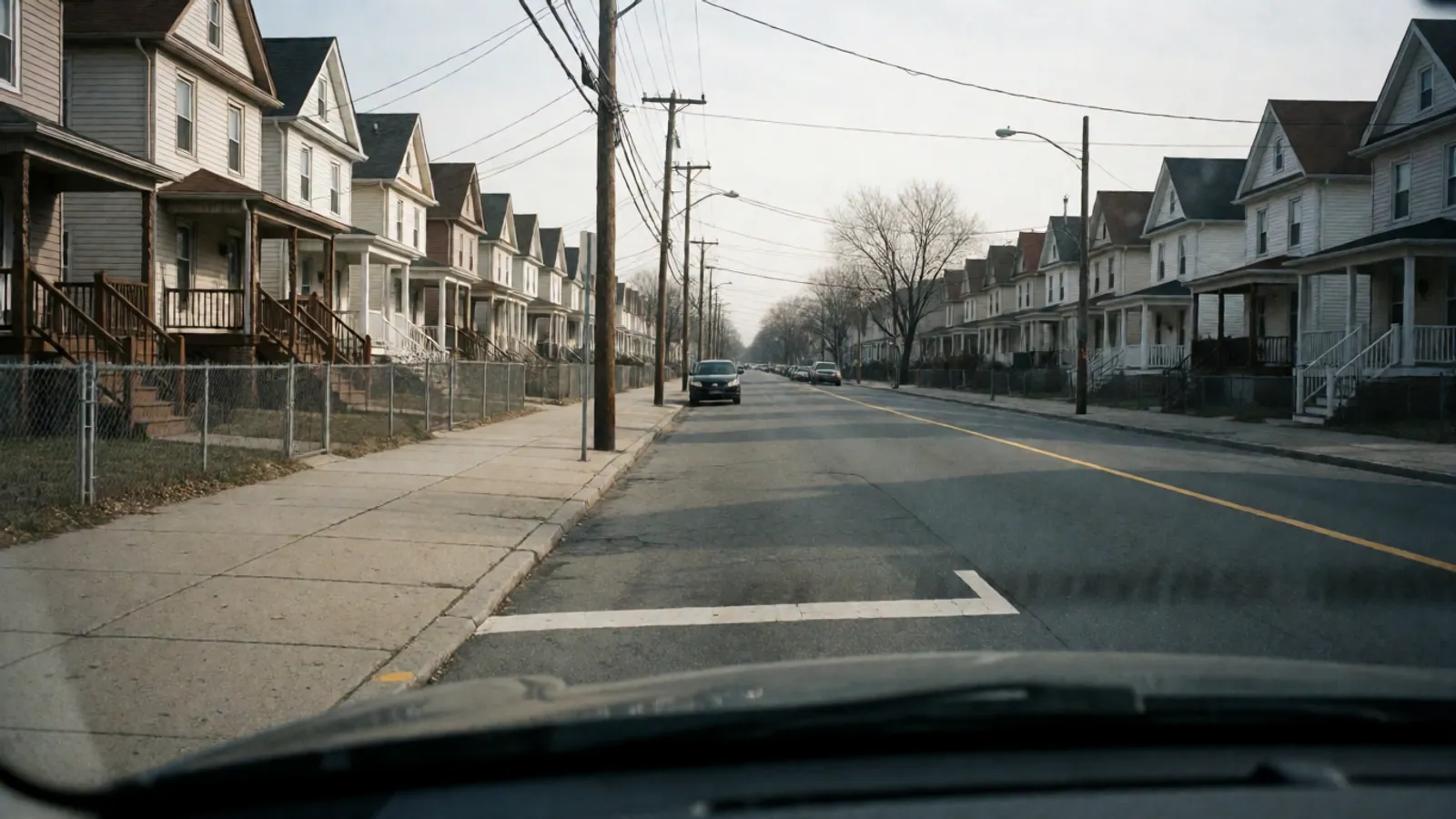
A wide residential street of clapboard houses in flat winter light, seen through a windscreen from behind a white stop line

Driving lessons

Older drivers

Coming back to driving later, or after an illness. This page is an attempt to be useful rather than delicate about it.

What this page is not

There is a way of writing this page that is well meant and faintly insulting. This is an attempt at the other one.

It is not an assessment of whether you should still be driving. Nobody here is qualified to hold that opinion, and a driving instructor who offers one is offering you something they made up. If that question is genuinely on the table it belongs with your doctor and with the State, and neither of them is us.

It is not aimed at an age either. It is aimed at a handful of situations, and people arrive at them at every age. Plenty of the people who book these lessons are nowhere near old and have simply had a bad year.

What it is: an ordinary lesson, in a car with a second brake in it, with somebody who does this for a living and will tell you what they saw.

The reasons people book one

  • You stopped, and now you have to start again

    Somebody else did the driving for a long time, and now they do not. A move, a bereavement, a change of job, a house further from the station. The licence is still valid and the driving is half there, which is a worse feeling than being a beginner, because you can remember being better at it.

  • You have been unwell

    An operation, a long illness, a spell in hospital, a change in what you can see or how far you can turn your head. What has changed is usually specific rather than general, and a lesson is a reasonable way to find out which specific thing it is.

  • Somebody has asked you to

    A son, a daughter, an insurer. It happens, it is awkward, and it is not a reason to be treated any differently once the car is moving. The instructor's report goes to you.

What an hour is spent on

  1. Mirrors, and the neck

    How far you can turn is a practical fact about driving. It is worked round with mirror positions and with head movement in the direction that still works, rather than advised about.

  2. Junction observation

    The thing that quietly goes first is not reaction time, it is the second look. Most of an hour like this is spent on the second look.

  3. Gaps and commitment

    Hesitation at a junction is its own hazard, and it is the one thing on this list that other drivers punish. It comes back quickly with practice.

  4. The car's own habits

    If you learned in something with a clutch and now drive an automatic, or the other way about, that is half a lesson on its own and worth naming when you book.

  5. Parking, if you want it

    Reversing into a bay, parallel parking, or the awkward space outside your own building, which is the one people actually care about.

The one State rule everybody meets

Every applicant for a New York permit or licence takes a vision test, at every age. The standard the State applies is 20/40 in at least one eye, with or without corrective lenses. It is not an age rule and it is not ours.

If your permit or licence carries a corrective-lens restriction, bring the glasses or the lenses to every lesson. An instructor who cannot see a valid permit or licence will not start, and the credit is spent. That is the rule everybody hates and none of us will bend, because the one time it is bent is the time it matters.

The driver's manual on licences and the vision test (opens dmv.ny.gov in a new tab)

Who takes them, and what it costs

Errol Banks. Errol runs the classroom session and takes most of the road test days. He has driven the Astoria Heights and Maspeth routes often enough to know which corner each of them turns the parking exercise on.

His diary is Wednesday to Sunday, 9 am to 5 pm, in Car A. Returning drivers are also Marta Oyelaran's work, and either of them is the right answer.

Booked as the standard lesson — one hour, one credit — or as the extended lesson if you would rather not be rushed.

One standard lesson

$70

one lesson of one hour · $70 a lesson

  • One hour, one credit. The usual way to start if you have never driven.
  • Credits last twelve months from the day you reserve them
  • The dearest way to buy an hour, and the right way to start if you are not sure

Reserve this

Five standard lessons

$325

five lessons of one hour · $65 a lesson

  • Five hours of credit, spent one at a time from whichever diary suits you.
  • Credits last twelve months from the day you reserve them
  • $25 less than five lessons bought one at a time

Reserve this

Where the figures come from. Every price on this page says how many lessons it buys and how long each one is, because that is what New York requires of a driving school's advertised price and because a figure without a duration beside it is not a price.

Telephone before you book. If an adaptation would make driving possible for you, telephone before booking. This school has no adapted controls beyond the instructor's own dual pedals, and saying so plainly is more use than a welcoming sentence that turns out not to mean anything.

What the office and the cars can and cannot do Refresher lessons

Ready to book a lesson?

Reserve a package and it becomes credits. Then pick an instructor, a date and a time out of the real diary, and give us the address to pick you up from. Nothing is paid on this website.