Office hours 000-000-0000
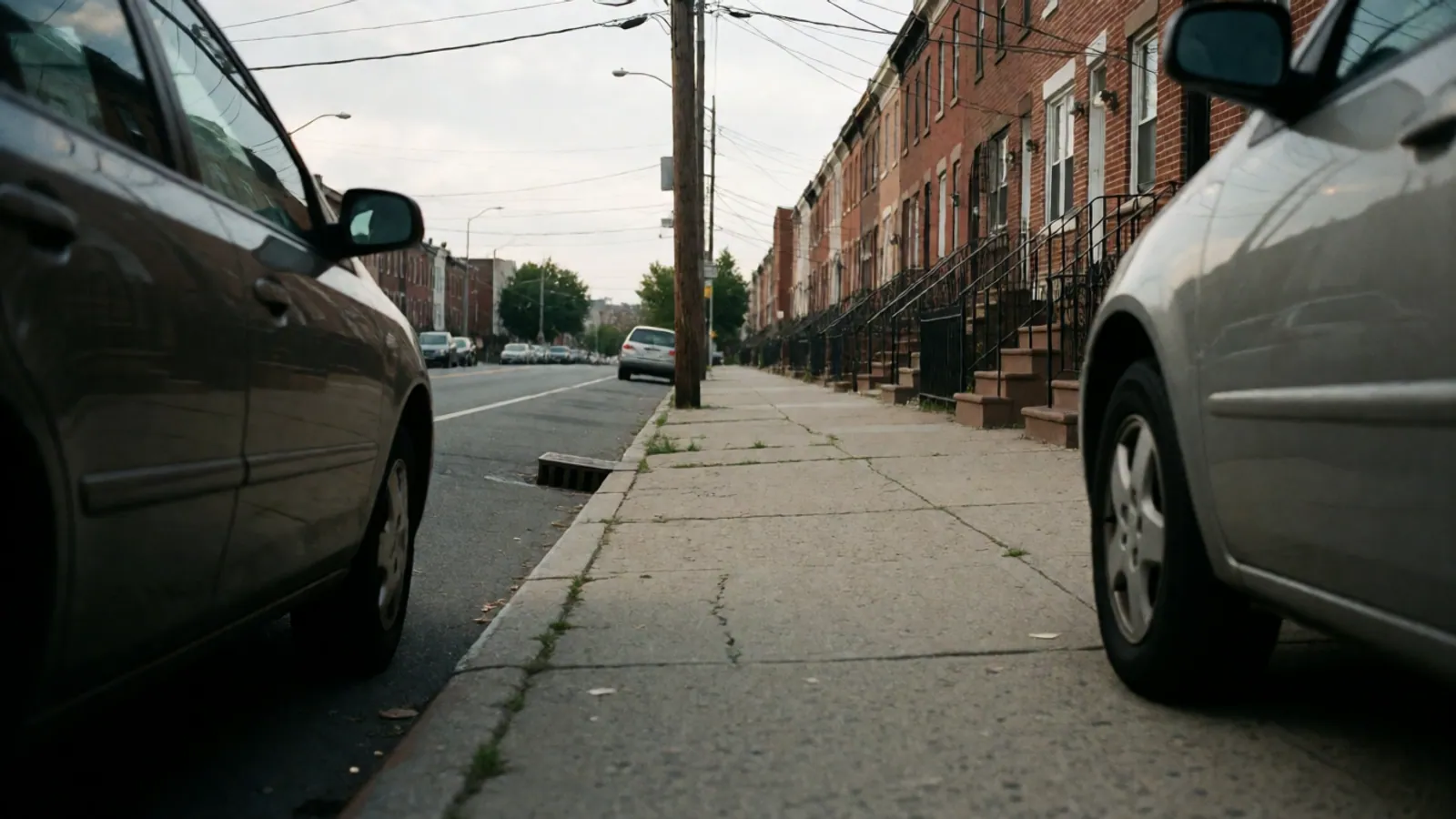
A gap between two parked cars at the kerb of a residential street of brick row houses with stoops, the cars cropped at the edges of the frame and the pavement clear between them

Driving lessons

Parallel parking

The exercise everybody dreads, taught as what it actually is: a fixed sequence, done slowly, on a street with nothing coming.

Why it frightens people, and why it should not

Parallel parking is the only part of learning to drive that comes with an audience. It is also the only part that is a fixed, repeatable sequence.

Everything else in a car is judgement applied to a situation that will not repeat. This one is the same shape every time: the same reference points, the same order, the same speed. That makes it the easiest thing on this website to become genuinely good at, and the only one where practice converts into competence at a predictable rate.

It is also almost never what fails a road test. Examiners fail people for observation, and they mostly do it in the first ninety seconds. The park is the thing candidates rehearse in their heads on the way to the site, which is part of why the observation goes.

So this page exists for two reasons: because people ask for the hour by name, and because the hour is a good use of a credit for anybody who has started to dread it. Dread is what turns a sequence into an event.

What actually fails a road test

The sequence, in the order it happens

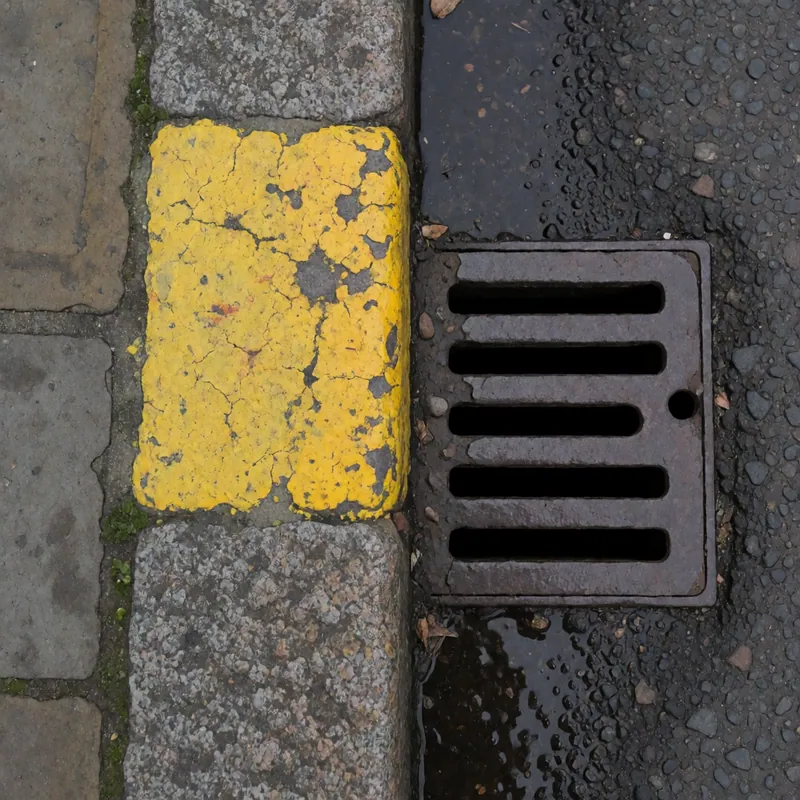
A painted kerb edge and a road drain, seen from directly above
  1. Choose the space

    Longer than the car, by more than it looks from the driving seat. The commonest failure of this manoeuvre is not the manoeuvre; it is a space that was never big enough, chosen by somebody who could not yet judge one.

  2. Line up

    Alongside the car in front, close enough to talk through the window, mirrors roughly level. Everything after this depends on this, which is why it is the step people skip.

  3. The first turn

    Reverse straight, then full lock. The front of the car swings out into the road before the back comes in. That swing is the part that frightens people and it is exactly what is supposed to happen.

  4. The second turn

    Straighten when the kerb comes into the mirror, then opposite lock to bring the front end in. Slowly. The steering can be as fast as you like; the car cannot.

  5. Straighten and stop

    Both wheels the same distance out, the car sitting in the space rather than at an angle across it, and the handbrake on before anybody relaxes.

  6. Do it again

    Then again, and then again with a car waiting behind you, because that is the version that actually goes wrong. An hour on one kerb is how this is learned.

An hour on one kerb

Ana Reyes. Ana takes most of the school's first lessons. She drives out of Woodside before the avenues fill, and she will spend a whole hour on a kerb and a cone if that is what the lesson needs.

Her diary is Monday to Saturday, 7 am to 3 pm, in Car A, and this is booked as the standard lesson — one hour in the car, one credit. It is an ordinary lesson that happens to be spent on one thing, which is a decision you make when you book it rather than a product we sell.

There is no trick and there is no universal reference point. Anybody who tells you to line the kerb up with a particular part of the window is telling you about their own car. The reference points you learn here are this car's, and moving to another car means finding them again, which takes part of a lesson and is worth knowing in advance.
The cars, and why reference points move

Where it is practised

  • Sunnyside

    Skillman and Greenpoint Avenues, the Gardens, and the one-way grid between them — parallel parking country, and ten minutes from the school. Nowhere near here has more legitimate practice spaces on it, and it is close enough to the office that the lesson does not spend itself getting there.

  • Astoria Park

    A place the State runs road tests from. Hills, a park road and a long straight by the water. A flat kerb is not the same exercise as one on a gradient, and finding that out on the morning of a test is a bad way to find it out.

Pickup, not the route. Where the car comes to you. A first lesson starts on quiet streets whatever the pickup address, and a test-route lesson is given near the test site.

Lessons in Sunnyside The test sites near here

What it costs

One standard lesson

$70

one lesson of one hour · $70 a lesson

  • One hour, one credit. The usual way to start if you have never driven.
  • Credits last twelve months from the day you reserve them
  • The dearest way to buy an hour, and the right way to start if you are not sure

Reserve this

Five standard lessons

$325

five lessons of one hour · $65 a lesson

  • Five hours of credit, spent one at a time from whichever diary suits you.
  • Credits last twelve months from the day you reserve them
  • $25 less than five lessons bought one at a time

Reserve this

Where the figures come from. Every price on this page says how many lessons it buys and how long each one is, because that is what New York requires of a driving school's advertised price and because a figure without a duration beside it is not a price.

Ready to book a lesson?

Reserve a package and it becomes credits. Then pick an instructor, a date and a time out of the real diary, and give us the address to pick you up from. Nothing is paid on this website.