five minute read
Automatic or manual, and what the restriction actually means
A test taken in an automatic gives you a licence with a restriction on it. Here is what that does and does not stop you doing.
37-32 61st Street, Woodside, NY 11377
The journal
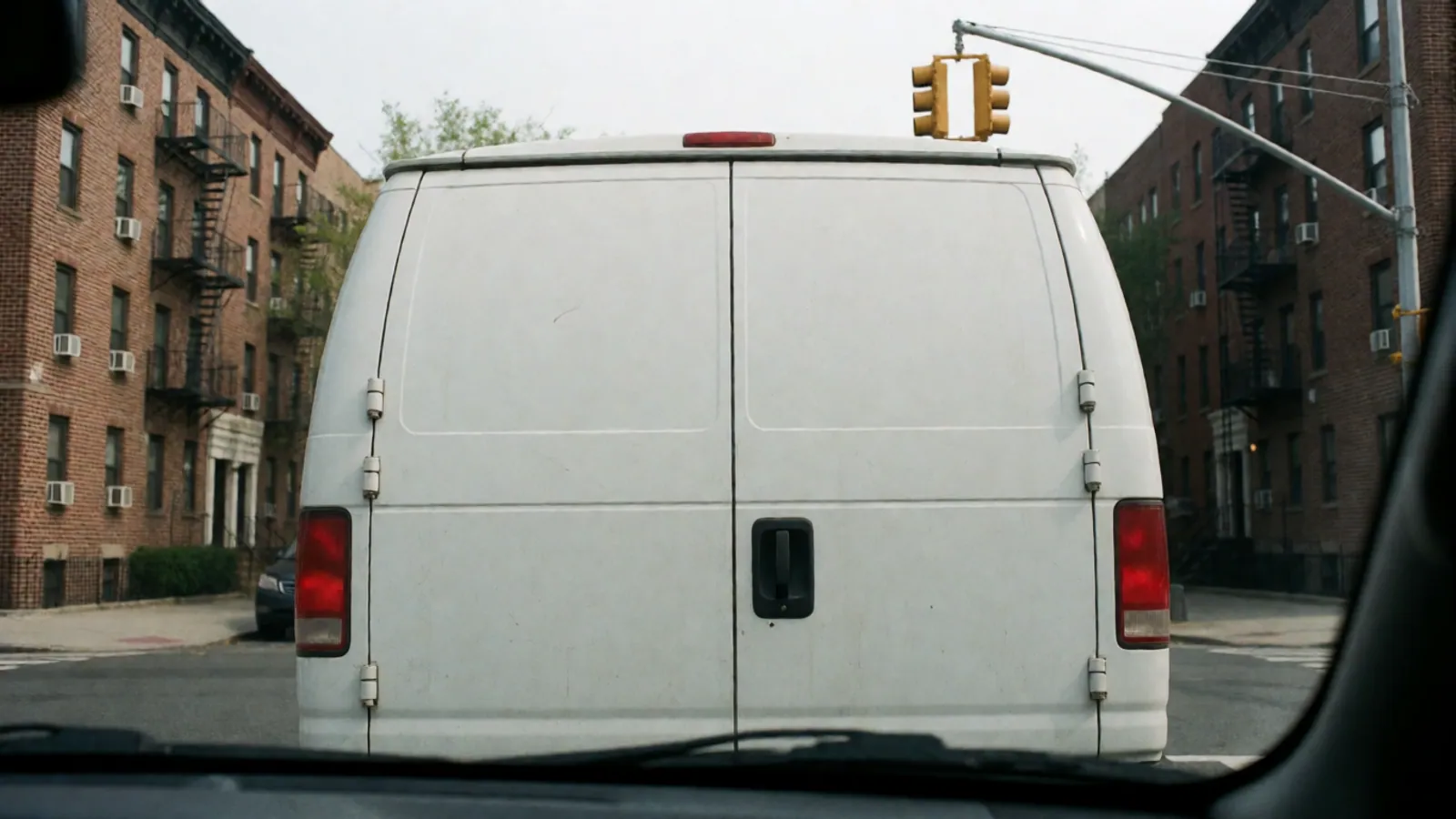
Double-parked delivery vans, an elevated train and six lanes of Queens Boulevard teach observation faster than any empty car park.
It comes up on the telephone constantly, usually as a kind of confession: “I know it is a terrible place to learn.” Sometimes with a plan attached — a cousin upstate, a quiet town, an empty car park on a Sunday.
An empty car park teaches car control and nothing else. It teaches the clutch or the creep, the wheel, the mirrors, the geometry of a space. All of that is real and all of it is the easy half. The hard half is reading a street: knowing which of the six things in front of you is about to matter, and knowing it early enough to do something dull about it instead of something sudden.
That half cannot be taught anywhere quiet, because there is nothing to read. It is taught by streets with too much happening on them, which is the one thing this borough has in abundance and gives away free.
37th Avenue, Northern Boulevard and the streets between them, which teach observation faster than any exercise a school could invent. A delivery van stopped in a live lane is a complete driving problem in one object: you must see it early, judge whether the oncoming gap is real, decide, and commit. Nobody learns that from a cone.
Under the elevated line, four lanes, and the busiest thing a new driver in Woodside meets. It is lesson four, not lesson one. The columns hide what is coming and the light under the structure goes from bright to dark to bright again, which is why it is the street this school waits a few lessons before using rather than the street it avoids.
Broadway, Grand Avenue and the service roads of Queens Boulevard — twelve lanes that are far easier to drive than to look at. It looks like the hardest thing on this list and it is nearly the easiest, because everything on it is going the same way at the same speed. What it actually teaches is where to be, and when to have decided it.
Grand Avenue, Flushing Avenue and the blocks below the LIE — commercial traffic, gradients and the unprotected left turns that come with both. A left turn across moving traffic on a hill is the single most useful exercise in the borough, and it is not an exercise; it is just a Tuesday there.
Ditmars, Steinway and 31st Street, and the approaches to the Triborough — where most Queens learners meet a highway ramp for the first time. Jackson Avenue, Vernon Boulevard and the numbered streets around them, with the Queensboro Bridge and the Pulaski a few blocks in either direction. A short merge lane onto a road already moving faster than you are is the thing most new drivers here are genuinely frightened of, and the thing they are most relieved to have met with somebody beside them.
Wide, fast and straight, which makes it the first place most students hold a steady speed.
Of the fifty hours of supervised practice New York asks an under-eighteen candidate to certify, the DMV recommends that at least ten are in moderate to heavy traffic. Not in an empty car park. Not on a quiet road upstate. The Driver's Manual, chapter one (opens dmv.ny.gov in a new tab)
That recommendation is the whole argument of this article, written by the body that eventually decides whether you get a licence. A learner in Queens does not have to go and find those hours. They are outside the door, and the practical problem here is the opposite one: making sure the first few lessons are quiet enough to be worth anything.
It is slower at the start. A learner here spends the first lessons on the calmest grids we can reach and gets to the interesting streets later than a learner on an empty suburban road. It can feel like falling behind. Then somewhere around the fifth or sixth hour the order reverses, because the part the other learner has not started yet is the part that takes the longest.
Some of it is dearer. Ramps, bridge approaches and a full run of a test route do not fit inside one hour once the drive out and the drive back are counted, which is what the extended lesson exists for. It is a real extra cost and it is on the prices page rather than hidden in a recommendation.
And you will make your mistakes in front of an audience. Somebody will sound a horn at you in your third lesson and it will feel personal. It is not, it happens to everybody, and the instructor beside you has heard it several thousand times. That is genuinely the worst of it.
The neighbourhood we pick you up in is not the neighbourhood you drive in. Where the car comes to you. A first lesson starts on quiet streets whatever the pickup address, and a test-route lesson is given near the test site.
So an address in the busiest part of the borough does not mean a first lesson in the busiest part of the borough, and an address on the quietest street does not mean you will be protected from an avenue forever. The route is chosen for the lesson, not for the postcode.
Six pieces about learning to drive in this borough, written by the people who teach it.
five minute read
A test taken in an automatic gives you a licence with a restriction on it. Here is what that does and does not stop you doing.
six minute read
Fifteen of the fifty supervised hours must be after sunset, and there is a reason the State counts them separately.
Reserve a package and it becomes credits. Then pick an instructor, a date and a time out of the real diary, and give us the address to pick you up from. Nothing is paid on this website.