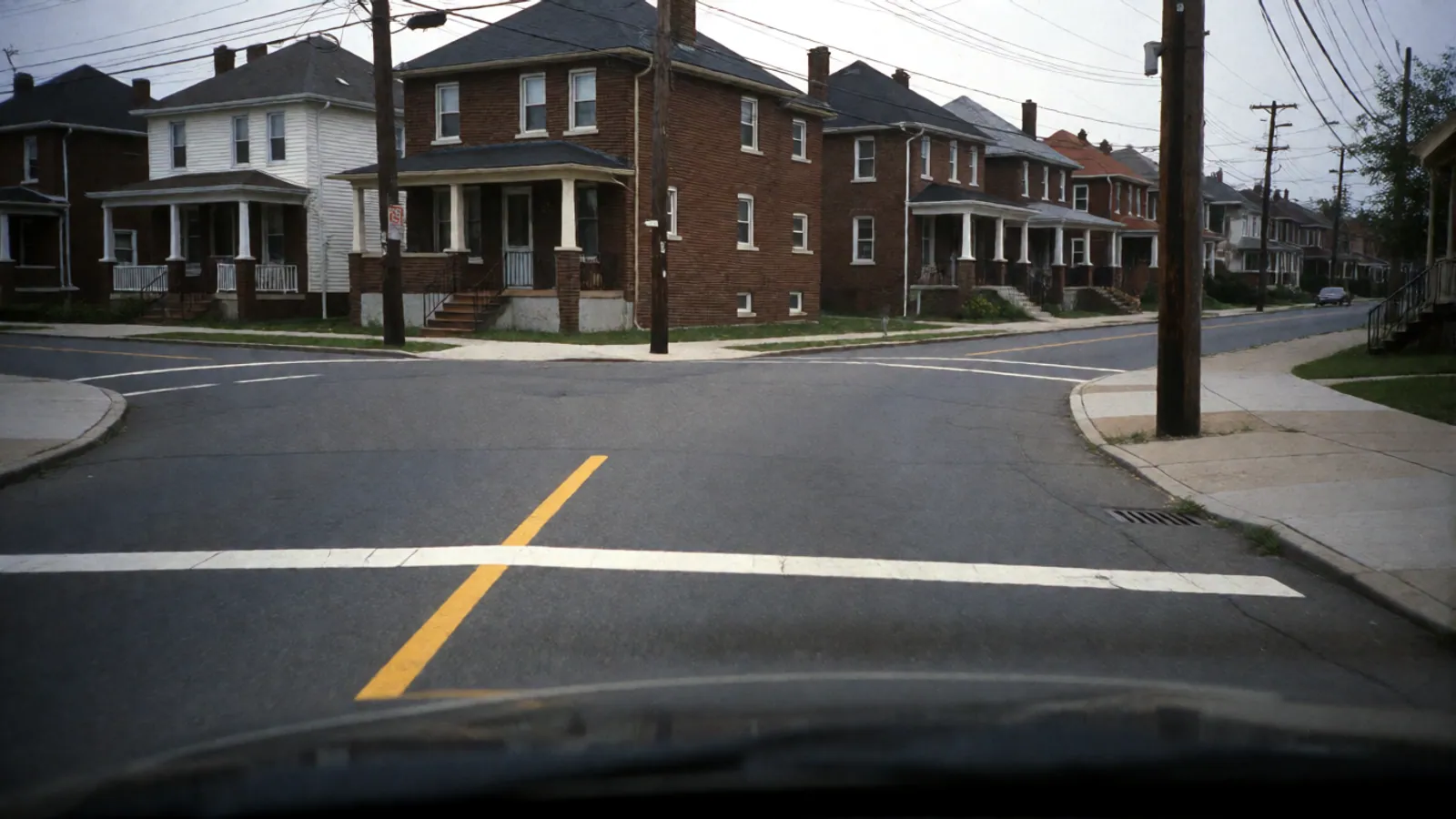
The course and the test
Road test preparation
Running the streets a test uses, at the hour the appointment falls, until the drive is ordinary. Nobody can promise you the outcome, and this page does not.
Preparation is a particular drive, not more hours
By the time somebody is preparing for a test they can already drive. What is left is narrow, and it is rehearsable.
A road test is one drive, on one morning, on a route somebody else chose, watched by somebody who has never met you. Almost nobody fails it because they cannot drive. They fail it because a particular drive, done under a particular kind of attention, is a different activity from the driving they have been doing for six weeks with a calm person in the passenger seat.
So preparation here is not a bigger block of lessons. It is the same streets the test uses, at the same time of day as the appointment, run start to finish without stopping to explain — and then run again with the explaining afterwards. Two or three of those tell an instructor more than ten ordinary hours do.
That is why it is given as extended lessons rather than as the standard hour. An hour and a half is what the drive out, a full run of the route, a second run and the drive back actually take once you stop pretending the clock is generous.
Near the site, and never on it
There is a rule about this, and it is one of the few in the trade that everybody breaks quietly. Checked in September 2026.
The State designates road test areas, and the regulations a licensed school works under forbid an instructor from giving driving instruction inside one. The DMV says the same thing from the other direction on its own page: practice driving is not allowed at New York State test sites.
The block itself is therefore off limits, and the neighbourhood around it is not. That is not a loophole, it is the point of the rule: the examiners need the kerb clear of learners doing three-point turns, and the streets a test route uses are ordinary public streets that anybody may drive on. A test-route lesson is given on those streets, from a pickup near the site rather than at your own door, and the page on pickup areas explains why the two addresses are different things.
It also means an honest instructor will tell you what a route is like rather than what a route is. Sites change the line they use, roadworks move a turn, and a school that sells you "the exact test route" is selling you a memory of a route.
The DMV on practice driving at test sites (opens dmv.ny.gov in a new tab)
The habit the whole thing turns on
Observation, and specifically observation the examiner can see you doing.
What gets rehearsed
- The mirror before the thing that needs the mirror, not after it. A glance that follows a decision is not observation, it is a reflex catching up.
- A head that moves. The examiner is sitting beside you and cannot read your eyes; a shoulder check is a movement or it did not happen.
- The stop line as a line to stop at, every time, including the empty junction at seven in the morning with nothing coming either way.
- Speed that is chosen rather than inherited from the car in front, which is the single most common thing an instructor has to say twice.
- The pull-away and the pull-in, which bracket the whole test and are the two moments nerves land hardest.
What does not get rehearsed
- Guessing which examiner you will get, or what mood they are in.
- A script for the parallel park. It is a manoeuvre with a method, and the method works from any starting position or it is not a method.
- Memorising a route turn by turn, which replaces looking with remembering and is worse than not knowing the streets at all.
- Anything about the outcome. Nobody who is not in the car that morning can tell you how it will go.
Which lesson it is, and what it costs
Test-route work is given as the longer lesson. Every price below says how many lessons it buys and how long each one is.
| Package | What it is | Price | A lesson | Against singles |
|---|---|---|---|---|
| One extended lesson | one lesson of an hour and a half | $100 | $100 | — |
| Five extended lessons | five lessons of an hour and a half | $465 | $93 | $35 less |
| Ten extended lessons | ten lessons of an hour and a half | $890 | $89 | $110 less |
The day of the test itself is a different slot again, held across your appointment, with the car and the ride there and back inside it. That has its own page, because what the State requires of a vehicle at a road test is a list worth reading before the morning rather than at the kerb.
And the part nobody advertises
You can book a road test whenever you like; it is your appointment. What you cannot do is make us put our car and our instructor behind it if we think the morning will go badly.
An instructor who has run a test route with you will say what they think, including when what they think is that the date you booked is optimistic. That is a judgement rather than a rule, it is made by the person who was in the car, and it comes with what would change it and roughly how many hours they believe that is.
It is the least popular sentence on this site and the one most worth publishing. A test taken three weeks early costs a morning, a fee and a fortnight's wait, and hands back a candidate more frightened than the one who set out.
Book a test-route lesson
Pick an instructor, a date and a time out of the real diary, and give us an address to pick you up from. The test itself is yours to book with the DMV, and it is free.